Quick Summary
- All three are Defined Benefit — your pension is guaranteed — SPPA (NHS, police, fire), LGPS Scotland (council and college workers), and the Scottish Teachers' Pension Scheme all pay a fixed income for life based on your salary and service, not on investment returns
- LGPS Scotland has the most generous accrual rate — 1/49th per year, compared to 1/54th in the NHS scheme and 1/57th in the Teachers' scheme. Over 25 years at £35,000, that's a £2,506 annual pension difference between LGPS and Teachers'
- Tax relief is automatically applied at your Scottish rate — all three schemes use net pay arrangements, so a 21% intermediate-rate taxpayer saves 21p in tax for every £1 contributed, not just 20% like a basic-rate relief-at-source scheme
- Use our free calculator — the Pension Tax Relief Calculator shows your exact Scottish tax saving on pension contributions at your marginal rate
Scotland's largest employers — the NHS, councils, police, fire service, and schools — all offer Defined Benefit pensions. But they're not the same scheme, and the differences matter more than most people realise.
Quick Answer: Scotland has three main public sector pension schemes: the SPPA-administered scheme covering NHS, police and fire; LGPS Scotland for council workers; and the Scottish Teachers' Pension Scheme. All are Defined Benefit, paying a guaranteed income for life. LGPS has the most generous accrual rate (1/49th per year), making it the most valuable on a like-for-like basis. Tax relief on contributions is automatic via net pay at your Scottish marginal rate. If you're in any of these schemes, you likely have one of the most valuable workplace benefits in Scotland.
Contents
- What Defined Benefit actually means for you
- The three schemes: who's in which
- Contribution rates compared
- Which scheme is most generous?
- Tax relief at Scottish rates
- What happens if you leave
- Topping up your pension
- Scotland vs England differences
- Frequently Asked Questions
What Defined Benefit actually means for you
A Defined Benefit pension pays you a fixed income for the rest of your life from retirement. The amount is calculated on your salary and how many years you've worked — not on how the stock market performs.
This is fundamentally different from Defined Contribution schemes — the type most private-sector workers have. With DC, your employer and you both pay in, the money gets invested, and whatever pot you end up with is what you have to work with at retirement. Markets fall, pots shrink.
With DB, the investment risk stays entirely with the scheme. If pension fund returns are poor, the employer tops the fund up. If you live to 95, you still receive the same pension every year.
The three public sector schemes in Scotland are all DB. This makes them among the most valuable employee benefits in the country. A pension of £20,000 per year for life from age 67 is roughly equivalent to a private pension pot of £500,000–£600,000 using a 4% drawdown rule.
Career Average Revalued Earnings (CARE)
All three current schemes use the CARE model. Instead of basing your pension on your final salary (the old arrangement), it averages your career earnings — each year you build a slice of pension based on that year's pay, and then that slice is "revalued" each subsequent year to protect it against inflation until you retire.
This means pay progression earlier in your career is actually more valuable in a CARE scheme than in a final salary scheme — your early contributions get revalued over a longer period.
The three schemes: who's in which
SPPA — Scottish Public Pensions Agency
The SPPA administers pension schemes for NHS Scotland, Scottish Police, and Scottish Fire & Rescue. If you work in any of these bodies, the SPPA is your pension administrator, and you access your record via pensions.gov.scot.
NHS Scotland staff are in the NHS Superannuation Scheme (Scotland) — the 2015 scheme, which is a CARE arrangement with 1/54th accrual.
Scottish Police and Scottish Fire & Rescue staff are in the Police Pension Scheme 2015 and Firefighters' Pension Scheme 2015 respectively — both also CARE schemes with different accrual rates and normal pension ages (often 60 for some legacy protections).
For this comparison we focus on the NHS 2015 scheme as the most common SPPA scheme.
LGPS Scotland — Local Government Pension Scheme Scotland
Council workers, most college staff, and some other public bodies are in LGPS Scotland. It's a CARE scheme with a 1/49th accrual rate — meaningfully more generous than the NHS scheme's 1/54th.
LGPS Scotland is separate from LGPS England & Wales. It's administered by individual council pension funds — from Borders to Strathclyde — pooled into Scottish regional funds. You can find your fund via scotlgpsmember.org.
Scottish Teachers' Pension Scheme (STPS)
Teachers in Scottish state schools are in the Scottish Teachers' Pension Scheme, administered by the Scottish Government via Hymans Robertson as third-party administrator. Access records at pensions.gov.scot/teachers.
The STPS is a CARE scheme with a 1/57th accrual rate — the least generous of the three on this metric. However, it has the highest employer contribution rate of any of the three.
Contribution rates compared
Work out your own numbers for each scheme: the NHS Scotland pension calculator, the Scottish Teachers' pension calculator, and the LGPS Scotland pension calculator each show your tier, contribution, employer top-up and the pension you build.
Here's how the three schemes compare side by side:
| Scheme | Who's in it | Accrual rate | Employee contributions | Employer contribution | Normal pension age | Death in service |
|---|---|---|---|---|---|---|
| SPPA (NHS 2015) | NHS Scotland staff | 1/54th | 5.7% – 12.7% | 22.5% | State Pension Age | 2× pensionable pay |
| LGPS Scotland | Council/college workers | 1/49th | 5.5% – 12% | ~17.5% | State Pension Age | Separate insurance |
| STPS | State school teachers | 1/57th | 7.35% – 12.14% | 26% | State Pension Age | 3× pensionable earnings |
Source: SPPA (pensions.gov.scot), LGPS Scotland (scotlgpsmember.org), Scottish Government / STPS, 2026/27
SPPA NHS contribution tiers
Employee contributions are tiered by pensionable pay:
| Annual pensionable pay | Employee rate |
|---|---|
| Up to £13,330 | 5.7% |
| £13,331 – £28,987 | 6.4% |
| £28,988 – £34,302 | 7.0% |
| £34,303 – £43,038 | 8.7% |
| £43,039 – £45,134 | 9.8% |
| £45,135 – £54,862 | 10.5% |
| £54,863 – £59,369 | 11.2% |
| £59,370 – £83,026 | 11.6% |
| £83,027 and above | 12.7% |
Source: NHS Circular 2026/03 (pensions.gov.scot), in force 1 April 2026. Scotland uses 9 tiers; England uses 6 — and Scotland's top rate (12.7%) is lower than England's (14.7%).
LGPS Scotland contribution tiers
| Annual pensionable pay | Employee rate |
|---|---|
| Up to £28,500 | 5.5% |
| £28,501 – £34,900 | 7.25% |
| £34,901 – £47,800 | 8.5% |
| £47,801 – £63,800 | 9.5% |
| Over £63,800 | 12% |
The 2026/27 structure has five contribution tiers, with thresholds uprated from 1 April 2026. Source: scotlgpsmember.org, 2026/27.
STPS contribution tiers
| Annual pensionable pay | Employee rate |
|---|---|
| Up to £36,195 | 7.35% |
| £36,196 – £48,724 | 8.88% |
| £48,725 – £57,775 | 9.90% |
| £57,776 – £67,975 | 10.61% |
| £67,976 – £92,693 | 11.73% |
| £92,694 and above | 12.14% |
Source: pensions.gov.scot/teachers/employers/pension-contribution-rates, 2026/27
Which scheme is most generous?
Accrual rate is the most important factor for long-term pension value. Here's what that means in practice.
Worked example: £35,000 salary over 25 years
Someone earning £35,000 consistently over 25 years (ignoring pay rises and revaluation for simplicity):
| Scheme | Accrual rate | Annual pension built | After 25 years |
|---|---|---|---|
| LGPS Scotland | 1/49th | £714/year | £17,857/year |
| SPPA NHS | 1/54th | £648/year | £16,204/year |
| STPS | 1/57th | £614/year | £15,351/year |
The LGPS Scotland member retires with £2,506 more per year than the equivalent STPS member — for life. With CPI revaluation in payment, this compounds over a 20+ year retirement into a very significant sum.
The honest take
The differences in accrual rate are real but shouldn't distract from the bigger picture: all three schemes are vastly better than what private-sector workers typically have. A council worker unhappy with 1/49th should first look at what their private-sector peers are building — which is usually a 3% employer contribution into a DC pot. The ~17.5% average employer contribution in LGPS Scotland alone is the most valuable employment benefit most people will ever receive.
Try it yourself
See exactly how much your public sector pension contributions cost after Scottish tax relief — at your marginal rate.
Open Pension Tax Relief CalculatorNo sign-up required.
Death in service
All three schemes provide death-in-service benefits, but the detail differs:
- SPPA NHS: 2× pensionable pay as a lump sum, plus a dependent's pension of 35.75% of your earned pension (2015 scheme; 37.5% applies to the older 2008 section)
- LGPS Scotland: The scheme typically provides a death grant and survivor's pension, with some funds offering 3× pay as a lump sum
- STPS: 3× annual salary as a lump sum plus a survivor's pension
Employer contributions — who's getting the better deal?
The employer contribution reflects what your employer pays directly into the pension fund on your behalf. You never see this money — it goes straight to the fund:
- STPS: 26% — the highest of the three
- SPPA NHS: 22.5%
- LGPS Scotland: approximately 17.5% average (varies by fund; the 2023 triennial valuation reduced the average from ~21% previously, reflecting improved funding levels across Scottish LGPS funds)
A teacher on £35,000 receives an employer contribution of approximately £9,100/year into the STPS — money that never appears on their payslip but builds directly toward their guaranteed pension.
Tax relief at Scottish rates
All three schemes operate on a net pay arrangement. Your contributions are deducted from your gross salary before income tax is calculated. This means you automatically get relief at your full Scottish marginal rate — no Self Assessment claim required.
What the relief is actually worth
For a £35,000 earner in the intermediate band (21%), a 7% pension contribution of £2,450 per year costs only:
£2,450 × (1 − 0.21) = £1,935.50 after tax relief
The Scottish Government, in effect, subsidises £514.50 of your £2,450 annual pension contribution.
Compare this to a relief-at-source scheme (like a personal pension or SIPP), where the provider claims 20% basic rate from HMRC — but Scottish 21% taxpayers must claim the extra 1% through Self Assessment. With net pay, it happens automatically.
| Tax band | Rate | Effective cost of 7% contribution on £35k |
|---|---|---|
| Starter (19%) | 19% | £1,984.50 |
| Basic (20%) | 20% | £1,960 |
| Intermediate (21%) | 21% | £1,935.50 |
| Higher (42%) | 42% | £1,421 |
| Advanced (45%) | 45% | £1,347.50 |
Source: HMRC net pay arrangements guidance
Higher-rate NHS staff in the Advanced band (45%) see their pension contributions cost less than 55p in the pound. That is an exceptional return before considering the pension itself.
What happens if you leave
If you leave a public sector job before retirement, your pension is not lost — it becomes a deferred benefit.
Deferred pension rules
In all three schemes, your pension remains in the scheme and is revalued each year until you claim it at retirement:
- LGPS Scotland: deferred benefits revalued by CPI
- SPPA NHS: deferred benefits revalued by CPI
- STPS: deferred benefits revalued by CPI
Note that the active CARE revaluation (CPI+1.5%) only applies while you're still a contributing member. Once deferred, you lose the +1.5% uplift.
You can claim your deferred pension from age 55 (rising to 57 from April 2028), but it will be actuarially reduced if taken before your Normal Pension Age.
Transferring between schemes
If you move from an LGPS Scotland council job to an NHS Scotland post (or vice versa), you can transfer your pension benefits under the Public Sector Transfer Club. Benefits transfer on favourable terms compared to commercial transfer values, preserving much of the accrued value.
This is complex — particularly if you have benefits in multiple schemes or historical benefits in pre-2015 "legacy" arrangements. Get advice from a regulated financial adviser before making any transfer.
Topping up your pension
All three schemes allow you to build extra pension beyond your standard accrual.
Added Pension / Additional Pension
Each scheme lets you buy additional blocks of guaranteed annual pension:
- LGPS Scotland: Additional Regular Contributions (ARCs) or Additional Voluntary Contributions (AVCs) through their AVC provider
- SPPA NHS: Additional Pension (AP) — buy lump sums or set up regular contributions
- STPS: Additional Pension Purchase
The cost depends on your age — older buyers pay more per £1 of additional pension.
Additional Voluntary Contributions (AVCs)
All three schemes operate an AVC arrangement, which is a Defined Contribution pot sitting alongside your DB scheme. AVCs are invested in funds of your choice and taxed as pension benefits on withdrawal.
AVCs are often overlooked, but they can be useful for:
- Tax-free cash at retirement (up to 25% of the AVC pot can be taken tax-free)
- Flexible drawdown without touching the main DB scheme
- Topping up for those who have deferred service gaps
For most public sector workers, a SIPP (Self-Invested Personal Pension) alongside the main scheme is a more flexible alternative to AVCs, with a wider fund choice and more control. Speak to a financial adviser to compare options.
Try it yourself
Calculate how much an additional pension contribution would cost you after Scottish tax relief — and whether a SIPP or AVC works better.
Open Pension Tax Relief CalculatorNo sign-up required.
Scotland vs England differences
The naming is confusing here. Some scheme names sound UK-wide but have separate Scottish versions.
| Feature | Scotland | England |
|---|---|---|
| NHS pension admin | SPPA (pensions.gov.scot) | NHS Business Services Authority |
| NHS scheme name | NHS Superannuation Scheme (Scotland) | NHS Pension Scheme (England & Wales) |
| LGPS | LGPS Scotland — separate scheme and separate fund pools | LGPS England & Wales |
| Teachers' pension | Scottish Teachers' Pension Scheme (STPS) | Teachers' Pension Scheme (TPS) |
| Tax relief rate | At Scottish rates (up to 48%) | At rUK rates (up to 45%) |
| Employer NI on contributions | Same UK rules | Same UK rules |
The Teachers' scheme is the clearest example: STPS is Scotland-only. The TPS (England & Wales) is entirely separate, with different contribution rates. Teachers who move between Scottish and English schools need to be aware that their membership transfers between two distinct schemes.
LGPS Scotland uses different fund pools (local authority-level) than LGPS England & Wales — but the framework is broadly similar, with individual council funds managing investments.
Scottish taxpayers get more tax relief on contributions than their English counterparts at higher rates — 42%, 45%, and 48% versus 40% and 45% in England. This makes the net cost of being in a public sector DB scheme slightly lower for Scottish higher earners.
Frequently Asked Questions
Can I opt out of my public sector pension scheme?
Yes — all three schemes allow you to opt out. But you'd be giving up an employer contribution worth 17.5%–26% of your salary (LGPS to STPS), plus death-in-service cover, plus guaranteed inflation-linked income for life. For most people this is a very bad financial decision. If you have concerns about affordability, speak to your HR department or a financial adviser before opting out.
What if I have two public sector jobs?
If you hold two concurrent jobs — for example, a part-time NHS role and a council role — you can build pension in both schemes simultaneously. Each scheme accrues separately based on pensionable pay in that role. There's no coordination between the two schemes, and no overall cap (though the Annual Allowance of £60,000 applies across all your pensions combined).
Does moving to a different council affect my LGPS Scotland pension?
No. All Scottish councils participate in LGPS Scotland, and your pension transfers automatically when you move between councils. There is no break in membership, and your accrued service continues to count. The administering fund may change (e.g. from Lothian Pension Fund to Strathclyde Pension Fund), but your benefits are preserved.
Is my public sector pension taxable?
Yes. Your pension is treated as employment income in retirement and taxed under Scottish income tax bands at whatever rates apply when you're drawing it. The tax-free personal allowance (currently £12,570) applies. National Insurance is not charged on pension income — only income tax. If your pension is your only income, you'd pay no tax on the first £12,570/year.
Can I take my public sector pension early?
You can take your pension from age 55 (rising to 57 in April 2028) in all three schemes, but it will be reduced to reflect the longer payment period. The reduction is actuarially calculated and roughly 3–5% per year before your Normal Pension Age. For a pension of £20,000 per year at NPA 67, taking it at 60 (7 years early) might reduce it to around £14,000–£15,000. Always model the numbers before making an irreversible decision.
Books for making the most of a public sector DB pension
If you're in the NHS, LGPS or teachers' scheme, these reads help you value it properly and decide whether to top it up.

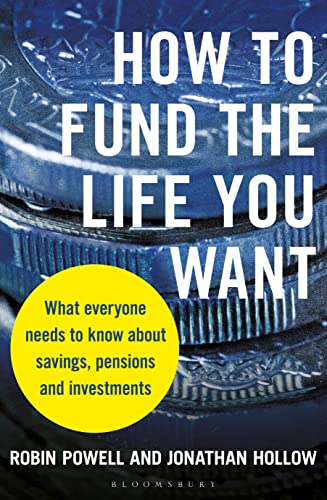
As an Amazon Associate, MoneySCOT earns from qualifying purchases. Book links are affiliate links — clicking them costs you nothing extra and helps support the site.
Related Articles
- NHS Scotland Pension Guide 2026/27 — full detail on SPPA contribution rates, accrual, and the Annual Allowance problem for senior staff
- Pension Drawdown Tax in Scotland — how your pension income is taxed when you start drawing it
- Salary Sacrifice in Scotland — how salary sacrifice interacts with Scottish income tax bands
- How to Claim Higher Rate Pension Relief Scotland — for any relief-at-source top-ups alongside your main scheme
- State Pension Scotland — the State Pension you'll receive on top of your public sector DB pension
This article is for informational purposes only and does not constitute financial, tax, or legal advice. Tax rates and thresholds can change — always verify current rates with Revenue Scotland, HMRC, or mygov.scot, and speak to a qualified financial adviser for advice specific to your circumstances.
Sources
- SPPA — NHS Superannuation Scheme (Scotland) — Scottish Public Pensions Agency
- LGPS Scotland — member guidance — LGPS Scotland, 2026/27
- Scottish Teachers' Pension Scheme — Scottish Government, 2026/27
- HMRC — net pay arrangement pensions — GOV.UK
- Scottish income tax rates 2026/27 — Scottish Government