By Catriona MacPherson · Scottish Landlord Tax Specialist
Last Updated: May 2026
Quick Summary
- ADS is now 8% — the highest it has ever been — on a £200,000 purchase in Scotland, you pay £19,600 in upfront property taxes versus £17,500 in England; Scotland is now more expensive to buy into
- Section 24 costs a 42% Scottish taxpayer nearly 60% more tax on the same rental income compared to the pre-2020 system — mortgage interest is no longer deductible, replaced by a 20% basic-rate credit only
- Edinburgh example works out at negative cash flow — £310,000 property, 75% LTV at 5%, yields −£3,118/year after tax and costs; capital growth alone props up most Edinburgh landlords
- Use our free calculator — the Buy-to-Let Tax Calculator shows your true net yield after Scottish taxes, Section 24, and all running costs
Three years ago, buy-to-let in Scotland was already under pressure. Today, the pressure is structural — and Scottish-specific in ways that most property calculators still don't reflect.
Quick Answer: Buy-to-let in Scotland in 2026 carries 8% ADS on purchase, Scottish income tax up to 48% on rental profit, and Section 24 mortgage interest restrictions that hit 42% taxpayers far harder than in England. In Edinburgh and other high-price areas, negative cash flow is now common for leveraged landlords paying Higher-rate tax. It can still work — in high-yield areas like Dundee and Glasgow, as a cash buyer, via an HMO licence, or through a limited company structure — but the numbers need scrutinising carefully before you commit.
Contents
- How Scotland's BTL landscape changed
- The four Scottish-specific costs
- Gross yields across Scotland
- Net yield worked example: Edinburgh
- Where buy-to-let can still work in Scotland
- The alternative: what £345,000 does elsewhere
- Frequently Asked Questions
How Scotland's BTL landscape changed
Scotland's buy-to-let environment has shifted fundamentally since 2022. Four separate changes — each significant on its own — have landed simultaneously:
The ADS has tripled as a percentage since its introduction. It started at 3%, rose to 4%, then 6%, and now sits at 8% following the December 2024 Budget. That is not a rounding error — it represents an extra £4,000 on a £200,000 purchase compared to two years ago.
Section 24 completed its phase-in. Mortgage interest deductions are gone entirely. For a Scottish 42% taxpayer, the effective cost of a £8,000 mortgage interest bill rose from £3,360 (under the old system) to a tax charge that now sits above £4,700 — nearly 60% more tax on the same underlying rental profit.
The Housing (Scotland) Act 2025 introduced a framework for Rent Control Areas (RCAs). Aberdeen City, Edinburgh, and Glasgow all have RCA applications in progress. Within an RCA, annual rent increases are capped at CPI+1% — effectively 4.8% in 2026/27 based on September 2025 CPI figures. You cannot raise rent above the cap even after significant property improvements.
And the Private Residential Tenancy (PRT) regime, which has applied since December 2017, continues to remove the flexibility that once made buy-to-let straightforward. No-fault evictions are banned. Minimum notice periods extend to 84 days for long-term tenants. In RCA-designated areas, landlords cannot sell during a tenancy without the tenant's agreement.
None of these changes, individually, would be fatal to buy-to-let as an asset class. Together, they change the maths materially.
The four Scottish-specific costs
1. Additional Dwelling Supplement: Scotland now costs more to buy into
The ADS is charged at 8% on the entire purchase price of any additional residential property over £40,000. There is no tapering — it applies to pound one of the purchase price, not just the amount above a threshold.
On a £200,000 buy-to-let purchase in Scotland:
| Tax | Scotland | England |
|---|---|---|
| Standard property tax (LBTT/SDLT) | £3,600 | £7,500 |
| Additional property surcharge (ADS 8% / SDLT 5%) | £16,000 | £10,000 |
| Total upfront tax | £19,600 | £17,500 |
Scotland is now £2,100 more expensive just to enter the market on a £200,000 property — the reverse of the historical position. For a £300,000 property, the gap is £8,600 in Scotland's favour for England.
⚠️ Changed December 2024: The ADS increased from 6% to 8% on 5 December 2024. If you purchased before this date and are comparing notes with another landlord, your ADS figure will be lower than current rates — recalculate any projected returns using 8%.
2. Rent Control Areas: rent growth capped going forward
The Housing (Scotland) Act 2025 allows local authorities to apply to the Scottish Government to designate Rent Control Areas. The cap for designated areas is CPI+1%, based on September's CPI figure for the following tax year.
For 2026/27, that cap is 4.8% (3.8% September 2025 CPI + 1%). In practice this means:
- A landlord charging £900/month in an RCA can raise rent to a maximum of £943/month per year
- The cap applies even if the local market would bear a higher rent
- Properties significantly improved or renovated do not automatically escape the cap
- The cap applies per tenancy — a new tenancy after a genuine void can start at market rent
RCA designation is not yet confirmed for Edinburgh, Glasgow, or Aberdeen, but applications are in progress. A landlord buying in these cities today faces the realistic prospect of rent growth being capped within the investment horizon.
3. Section 24: nearly 60% more tax for Scottish 42% taxpayers
Section 24, fully phased in since April 2020, removes mortgage interest as an allowable expense. Instead, landlords receive a 20% basic-rate tax credit on mortgage interest paid.
For a Scottish landlord paying 42% income tax with £15,000 annual rent and £8,000 mortgage interest:
| Old system (pre-2020) | Current Section 24 | |
|---|---|---|
| Taxable income | £15,000 − £8,000 = £7,000 | £15,000 |
| Income tax at 42% | £7,000 × 42% = £2,940 | £15,000 × 42% = £6,300 |
| Section 24 credit | N/A | £8,000 × 20% = −£1,600 |
| Net tax bill | £2,940 | £4,700 |
| Increase | +£1,760 (+60%) |
The Section 24 credit is fixed at 20%, regardless of your marginal rate. The higher your Scottish tax rate, the larger the gap — and the more you lose compared to the pre-2020 position. An English Higher-rate taxpayer (40%) pays £4,400 tax on the same example — still more than before, but £300 less than the Scottish 42% taxpayer.
4. Private Residential Tenancy: less operational flexibility
The PRT regime affects cash flow in ways that don't show up in yield calculations:
- No-fault evictions banned: You must have a legal ground to end a tenancy. Selling the property is a ground, but tenants have rights to remain and significant notice periods apply.
- Notice periods: 28 days for tenancies under 6 months; 84 days for tenancies over 6 months.
- Void management: You cannot easily give notice to start a refurbishment, then re-let at a higher rent — this route is much more tightly controlled under the PRT than the old assured shorthold framework that English landlords still use.
These are manageable for a long-term, well-run portfolio. For an accidental landlord or someone who planned a short investment horizon, the PRT creates operational friction that affects the real-world return.
Try it yourself: Our free Buy-to-Let Tax Calculator shows your true net yield after Scottish taxes, Section 24, ADS, and running costs. Enter your purchase price and expected rent for an instant result.
Gross yields across Scotland
Before looking at net yield, it helps to understand where Scotland's gross yields currently sit. Gross yield is simply annual rent divided by purchase price — before tax, mortgage costs, or any expenses.
| Area | Average property price | Average monthly rent | Gross yield |
|---|---|---|---|
| Glasgow | £185,000 | £1,050 | 6.8% |
| Dundee | £145,000 | £800 | 6.6% |
| Aberdeen | £175,000 | £900 | 6.2% |
| Inverness | £200,000 | £950 | 5.7% |
| Edinburgh | £310,000 | £1,450 | 5.6% |
Source: Registers of Scotland average prices; Zoopla/ESPC rental market data, Q1 2026.
Glasgow and Dundee lead on gross yield. Edinburgh's higher rents are offset by significantly higher purchase prices. The difference between 6.8% (Glasgow) and 5.6% (Edinburgh) might look modest — but when you run the net yield calculation, it is the difference between a viable investment and a loss-making one.
The honest take
The gross yield figures above look plausible on paper. But gross yield on its own is meaningless for a Scottish 42% taxpayer with a mortgage. The correct question is never "what's the yield?" — it's "what's left in my pocket after Section 24, ADS is paid back through rental income, Scottish income tax, agent fees, voids, and repairs?" In Edinburgh's case, for a leveraged investor, the answer is often: nothing, or a small loss.
Net yield worked example: Edinburgh
Here is a worked example using Edinburgh figures — one of the most popular landlord markets in Scotland. We assume a 42% Scottish taxpayer, 75% loan-to-value mortgage at a 5% rate, and 10% letting agent management.
Property: £310,000. Annual rent: £17,400 (£1,450/month).
Purchase costs
| Item | Amount |
|---|---|
| LBTT (standard bands on £310,000) | £11,100 |
| ADS (8% × £310,000) | £24,800 |
| Solicitor/survey/other | £3,000 |
| Total upfront costs | £38,900 |
| Total invested (£310,000 + £38,900) | £348,900 |
Annual income and running costs
| Item | Amount |
|---|---|
| Gross annual rent | £17,400 |
| Letting agent (10% of rent) | −£1,740 |
| Landlord insurance | −£500 |
| Maintenance and repairs | −£800 |
| Void allowance (5% of rent) | −£870 |
| Income after costs (excl. mortgage) | £13,490 |
Mortgage cost
| Item | Amount |
|---|---|
| 75% LTV on £310,000 = £232,500 mortgage | |
| Annual interest at 5% | −£11,625 |
Section 24 tax calculation
| Item | Amount |
|---|---|
| Taxable rental income (gross rent minus allowable expenses, excl. mortgage interest) | £13,490 |
| Income tax at 42% Scottish Higher rate | £5,666 |
| Section 24 credit (20% × £11,625 mortgage interest) | −£2,325 |
| Net income tax on rental income | £3,341 |
Net cash position
| Item | Annual |
|---|---|
| Gross rent | £17,400 |
| Running costs (excl. mortgage) | −£3,910 |
| Mortgage interest | −£11,625 |
| Income tax after Section 24 credit | −£3,341 |
| Net annual cash position | −£1,476 |
This Edinburgh investment produces negative cash flow of −£1,476 per year (approximately −£123/month). The landlord must fund this from other income, or rely on capital appreciation to justify holding the property.
To break even on the £348,900 total invested, the property needs to grow by at least £1,476 per year in value — that's 0.4% annual growth. Edinburgh has historically delivered capital growth, but this is not guaranteed, and the landlord takes the risk.
💡 Money-saving tip: If your combined income sits just above the Scottish Higher-rate threshold (£43,663), a pension contribution can pull your income back into the Intermediate band (21%) — changing your Section 24 tax rate from 42% to 21% on the same rental income. On £13,490 of taxable rental income, that saves £1,414/year in tax. Run this through the Buy-to-Let Tax Calculator with different income assumptions.
Where buy-to-let can still work in Scotland
The Edinburgh example above is the worst case for leveraged, Higher-rate landlords. There are configurations where the maths improve significantly.
High-yield areas: Dundee, Glasgow, and parts of Fife
A Dundee property at £145,000 generating £800/month rent carries a gross yield of 6.6% — almost a full percentage point higher than Edinburgh. With lower purchase price, the ADS is also lower (£11,600 vs £24,800). The same 42% taxpayer with 75% LTV at 5% in Dundee generates positive — if slim — cash flow.
Markets to monitor: Dundee city centre, north Glasgow (Maryhill, Springburn), Kirkcaldy, Falkirk. These areas have historically offered yields that better absorb the Scottish tax burden.
Cash buyers: no mortgage, no Section 24 problem
Section 24 is irrelevant if there is no mortgage. A cash buyer's taxable income is simply rent minus allowable expenses — mortgage interest doesn't feature in the calculation at all.
For a cash buyer purchasing Edinburgh's £310,000 property: taxable rental income of £13,490, tax at 42% = £5,666 (no Section 24 complexity). Net annual income: £13,490 − £5,666 = £7,824 — a net yield of 2.5% on the £348,900 total invested. Still modest, but positive.
Cash buyers also avoid the mortgage stress test, have faster purchase timelines, and are more competitive in auction and off-market scenarios.
HMO: higher income per property
Houses in Multiple Occupation (HMOs) charge rent per room rather than per property. A 5-bedroom HMO in Glasgow charging £600/room generates £3,000/month — nearly triple the single-let rent on the same property. Gross yields of 9–12% on well-run HMOs survive Section 24 at Scottish rates.
The tradeoffs are real: HMO licensing is required from Scottish local authorities, the application process is detailed, and management intensity is much higher than single-let. Councils have different licensing requirements — check with the specific local authority before proceeding.
Limited company structure: corporation tax vs income tax
A limited company pays corporation tax (25% main rate, 19% small profits rate for profits up to £50,000) rather than personal Scottish income tax at 42%+. Critically, limited companies can still deduct mortgage interest in full — Section 24 only applies to individual landlords, not corporate ones.
For a company with £13,490 of rental profit and £11,625 mortgage interest:
| Individual (42%) | Limited company (19% CT) | |
|---|---|---|
| Taxable income | £13,490 (Section 24 applies) | £13,490 − £11,625 = £1,865 |
| Tax rate | 42% | 19% |
| Tax bill | £5,666 − £2,325 credit = £3,341 | £1,865 × 19% = £354 |
The company tax bill is dramatically lower. However, extracting that profit personally then faces dividend tax (35.75% at UK Higher rate for income over £50,270) or salary (Scottish income tax rates apply). The combined effective rate on fully extracted profit is typically 43–47% — higher than the individual route for most landlords.
Limited company BTL makes the most sense when:
- You intend to retain profits inside the company rather than extract them immediately
- You are building a portfolio and reinvesting income into further purchases
- Your combined personal income is already at Scottish Top rate (48%), making company tax even more advantageous relative to personal tax
- You have 5+ years until you need the income
Speak to an accountant experienced in Scottish property before incorporating. The mortgage position (limited company buy-to-let mortgages carry higher rates) affects the calculation.
Compare Scottish landlord tax with English equivalent: Use our Scotland vs England Comparison Calculator to see how the same investment property performs under Scottish and English tax rules side by side.
The alternative: what £345,000 does elsewhere
The Edinburgh total investment (£310,000 property + £38,900 costs) is approximately £348,900. It's worth asking what that capital does in a different setting.
£348,900 in a Stocks and Shares ISA at a 7% average annual return generates approximately £24,423/year in portfolio growth — entirely tax-free within the ISA wrapper. There are no tenants, no void periods, no RCA rent caps, no ADS, no Section 24, no maintenance call-outs, and no compliance obligations under the PRT. Liquidity is immediate — you can sell within a few days, not months.
The comparison is not perfectly like-for-like: property can be purchased with leverage (the ISA cannot), which amplifies both gains and losses. A leveraged property holding at moderate capital growth can outperform an unleveraged ISA portfolio. But the comparison does illustrate that the required capital growth rate from Edinburgh buy-to-let to beat the ISA alternative is higher than many investors assume, once the costs are fully accounted for.
The honest answer — and the one that rarely appears in property investor forums — is that for a typical Scottish 42% taxpayer with a mortgage, Edinburgh buy-to-let in 2026 requires capital appreciation to deliver acceptable total returns. It is no longer a positive cash-flow asset class at typical entry prices.
Frequently Asked Questions
Is a limited company always better for Scottish landlords?
Not always. A limited company removes Section 24 and replaces Scottish income tax with corporation tax — but extracting profit personally still triggers dividend or salary tax. For most landlords with one or two properties who need the rental income to live on, the combined effective rate on extracted profits is similar to or slightly higher than the individual route. The company structure pays off when profits are retained and reinvested inside the company over many years — making it more suitable for portfolio builders than single-property investors.
What about holiday lets after the FHL regime ended?
The furnished holiday lettings (FHL) tax regime was removed in April 2025. Holiday lets are now taxed as ordinary rental income — the same income tax rates apply, Section 24 mortgage interest restrictions apply, and capital gains tax on disposal follows normal residential property rules. The main remaining advantage is that holiday lets in Scotland are not subject to Rent Control Area restrictions (RCAs only apply to residential lets) and rental income is not constrained by a per-tenancy cap. Higher nightly rates can make the economics work better than long-term lets, but it requires more active management and is sensitive to local tourism demand.
Can I still deduct letting agent fees and other costs?
Yes — letting agent fees, insurance, maintenance (not improvements), safety certificates, accountancy costs, and replacement of domestic items are all still allowable deductions from rental income. Section 24 only removed mortgage interest as a deduction. Every £100 of legitimate allowable expenses saves £42 in income tax at the Scottish 42% rate — claiming all allowable costs is important.
What if I inherited a buy-to-let property rather than buying one?
If you inherited a property rather than purchasing it, you did not pay ADS on acquisition — inheritance is exempt. You also have a higher base cost for capital gains tax purposes (the value at the date of inheritance, not the original purchase price). The ongoing rental income is still taxed at Scottish rates and Section 24 still applies if there is a mortgage, but the inheritance position is significantly more favourable than a new purchase in the current market.
Should I sell my Scottish buy-to-let now?
This depends entirely on your individual situation — purchase price, existing mortgage, capital growth since acquisition, personal tax position, and future plans. A property purchased before ADS was introduced, or purchased at a low price with significant capital growth, may still make excellent financial sense to retain. The analysis in this article applies primarily to new purchases in 2026. If you are considering selling, factors to weigh include CGT on the gain (18% or 24% depending on your UK income), whether you can time the sale in a tax year where your income is lower, and whether retained equity can be redeployed more efficiently. Speak to a property tax accountant before deciding.
Before committing to a buy-to-let purchase, run the numbers with our free Buy-to-Let Calculator. We're also building the Scottish Landlord Portfolio Tracker — a spreadsheet that will model net yield after Scottish income tax across your whole portfolio. It's not on sale yet; the product page has a waitlist.
Still weighing up buy-to-let? Read these first
Before you decide whether Scottish BTL is worth it in 2026, these two books help you judge the numbers and spot the deals that still stack up.

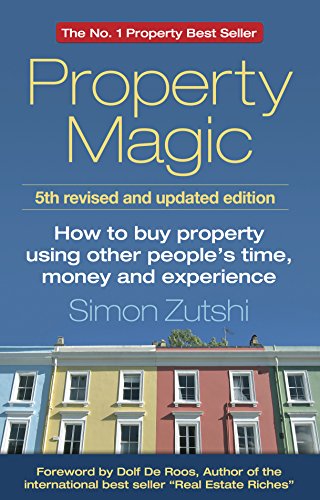
As an Amazon Associate, MoneySCOT earns from qualifying purchases. Book links are affiliate links — clicking them costs you nothing extra and helps support the site.
Related Articles
- Buy-to-Let Tax Scotland 2026/27 — 8% ADS, 42% on Rent, Real Net Yields — detailed breakdown of every cost Scottish landlords face
- ADS Refund and Repayment Guide — when you can reclaim the Additional Dwelling Supplement
- Scottish Income Tax Rates 2026/27 — the rates that determine your rental tax bill
- Section 24 at Scottish Tax Rates — why mortgage interest restrictions hit Scottish landlords harder than English ones
- Capital Gains Tax Scotland — what you owe when you sell a buy-to-let property
This article is for informational purposes only and does not constitute financial, tax, or legal advice. Tax rates and thresholds can change — always verify current rates with Revenue Scotland, HMRC, or mygov.scot, and speak to a qualified financial adviser for advice specific to your circumstances.
Sources
- Additional Dwelling Supplement rates and guidance — Revenue Scotland, 2026/27
- LBTT rates and bands — Revenue Scotland, 2026/27
- Scottish income tax rates — Scottish Government, 2026/27
- Section 24 mortgage interest restriction — HMRC
- Housing (Scotland) Act 2025 — Scottish Parliament
- Registers of Scotland property statistics — average property prices by area, Q1 2026
- Scottish Government housing statistics — rental market data