Quick Summary
- You can reclaim ADS if you sell your previous main residence within 36 months of buying the new one — at Scotland's current 8% rate, that's £16,000 back on a £200,000 purchase
- Claim promptly after selling — there is no absolute claim deadline, but filing within 12 months of the sale requires no extra evidence; filing later requires proof of sale from Revenue Scotland
- Apply directly to Revenue Scotland — you don't need a solicitor to claim the refund, though most will do it for you as part of the sale
- Track your exact deadlines — use our ADS Reclaim Tracker to see when your sale and claim deadlines fall
If you bought a new home in Scotland before selling your old one, you paid 8% Additional Dwelling Supplement (ADS) on top of the standard LBTT. The good news: the moment you sell your previous main residence, you can reclaim every penny. For purchases from 1 April 2024, the sale window was extended from 18 to 36 months — giving you three full years to sell the old property.
Quick Answer: To reclaim ADS, you must sell your previous main residence within 36 months of buying the new one, then apply to Revenue Scotland within 12 months of the sale. Apply online at revenue.scot or using the paper form. You'll need the LBTT return reference, details of the old property sale, and proof of previous residence. Most refunds are paid within 4–8 weeks. Use our ADS Reclaim Tracker to check your exact deadlines.
Who can claim an ADS refund?
You can reclaim ADS if all of these apply:
- You paid ADS on a residential property purchase in Scotland after 1 April 2016
- The new property has become your only or main residence (not a second home, buy-to-let, or holiday let)
- You sold your previous main residence after buying the new one
- The sale completed within 36 months of the new purchase
- You apply within 12 months of selling the old property
What counts as your "previous main residence"?
Your main residence is the property you actually lived in as your only or primary home before the purchase. It doesn't have to have been owned for any minimum period, but you must have occupied it as your main home at some point in the 18 months before the new purchase.
If you owned a property but never lived in it (e.g. an inherited house you rented out), it's not your main residence and you can't use it to claim an ADS refund.
The "economic unit" rule for couples
ADS treats spouses, civil partners, and cohabiting partners as a single economic unit. This means:
- If either partner owns another property, ADS applies to the new purchase
- When claiming the refund, the old property can be sold by either partner — it still counts for the refund
- Couples applying for first-time buyer relief must both be first-time buyers
A common scenario: one partner owns a flat from before the relationship; the couple buys a new home together. ADS applies. When the partner's old flat sells within 36 months, the ADS is refundable — even though only one partner owned the old property.
The 36-month window
The 36 months runs from the effective date of the new purchase (usually the date of entry/completion) to the effective date of the old property sale. Both dates matter:
- New purchase effective date: the day you took possession (usually your "move in" date)
- Old property sale effective date: the day completion was signed
If the old property sale drags beyond 36 months, you lose the refund. No extensions, no exceptions.
What happens if I miss the 36 months?
You keep the ADS paid. The tax becomes permanent. In a slow market, this catches some sellers — especially in rural areas or with high-value properties.
Can I extend the deadline?
Only in very limited circumstances, and only retrospectively. Revenue Scotland may consider extensions for force majeure events (serious illness, bereavement, or certain legal disputes beyond your control). This is not guaranteed and should not be relied on.
Try it yourself
Enter your purchase date to see when your sale deadline and claim deadline fall — with days remaining counter.
Open ADS Reclaim TrackerNo sign-up required.
Submitting your ADS claim
Once you've sold the old property within the 36-month window, you can file your ADS refund claim. There is no hard filing deadline — but Revenue Scotland applies an evidentiary threshold:
- Within 12 months of the original LBTT return filing date: no extra evidence needed, straightforward process
- After 12 months: you must provide proof of sale (completion statement, solicitor letter, etc.)
Don't delay unnecessarily — filing immediately at the point of sale is easiest and fastest.
Example timeline:
- 1 May 2025: Buy new home (pay ADS)
- 1 November 2025: Sell old home (6 months later — well within 36 months)
- 1 November 2026 (or later): Submit ADS refund claim to Revenue Scotland
You don't need to wait after the sale — you can claim the refund immediately. Many solicitors submit the claim as part of completing the old property sale.
How to apply for an ADS refund
Step 1: Gather your documents
You'll need:
- LBTT return reference from the original purchase (look for "RS1" or "UTRN" on your purchase paperwork)
- Completion date of the new purchase (effective date)
- Completion date of the old property sale (effective date)
- Address of the old property
- Proof you lived in the old property (council tax bill, utility bill, electoral roll)
- Sale contract or missives from the old property
- Bank account details for the refund
Step 2: Choose your submission method
Option A: Your solicitor handles it Most Scottish solicitors will submit the ADS refund claim as part of your old property sale. Ask them when the sale completes. They'll usually charge a small fee (£50-£150) or include it in their standard conveyancing charge.
Option B: You submit directly You don't need a solicitor — you can claim yourself through Revenue Scotland. This is usually:
- Online via the SETS (Scottish Electronic Tax System) portal — if you have an account
- By paper form — download the LBTT refund form from revenue.scot
Step 3: Submit the claim
For online submission, log in to SETS, find the original LBTT return, and follow the "Amend a return" process to claim the ADS refund. The system asks for the same information as the paper form.
For paper submission, send the completed form to:
Revenue Scotland
PO Box 24068
Victoria Quay
Edinburgh EH6 9BR
Step 4: Wait for the refund
Revenue Scotland typically processes ADS refunds within 4–8 weeks. Complex cases (or cases with missing documents) can take longer. The refund is paid directly to your nominated bank account.
How much will I get back?
The refund is the full ADS amount you paid — no partial refunds, no deductions. Since December 2024, ADS is 8% of the entire purchase price for the new property.
| New property price | ADS (8%) refundable |
|---|---|
| £150,000 | £12,000 |
| £200,000 | £16,000 |
| £300,000 | £24,000 |
| £400,000 | £32,000 |
| £500,000 | £40,000 |
This is on top of the standard LBTT you paid, which is not refundable. Standard LBTT stays regardless of whether the property becomes your main residence.
Common reasons claims get rejected
1. Sold after the 36-month window
The single biggest reason. There's no discretion once the deadline passes. Check your dates carefully — the effective date is usually completion, not the date missives were signed.
2. Didn't actually live in the old property as main residence
If you can't prove you occupied the old property as your main home, Revenue Scotland may refuse the claim. Utility bills, council tax bills in your name, and being on the electoral roll are strong evidence. Rental contracts for the old property (showing it was let) are fatal to the claim.
3. Claim submitted after the 12-month deadline
There is no absolute claim deadline — but claims filed more than 12 months after the original LBTT return may require additional evidence. File as soon as the old property sale completes.
4. New property isn't actually your main residence
ADS refunds only apply if the new property has become your only or main residence. If you moved into the new property but then moved out again (e.g. relocating for work), the refund can be challenged.
5. Wrong LBTT reference
Double-check the LBTT return reference from your original purchase — it's a 14-character alphanumeric string. A wrong reference causes delays and may trigger Revenue Scotland to ask for additional evidence.
When to claim it yourself vs use a solicitor
Use a solicitor if:
- The claim is happening at the same time as the old property sale
- You're not confident navigating SETS or HMRC/Revenue Scotland systems
- The case is complex (multiple owners, trust structures, economic unit edge cases)
- You want the claim submitted promptly without risk of missing a deadline
Claim it yourself if:
- You're comfortable with online forms and have all the documents
- The case is straightforward (simple couple, both main residences, clear dates)
- You want to save the £50–£150 solicitor fee
- Your solicitor didn't offer the service at the sale
Frequently Asked Questions
Do I have to pay ADS upfront and reclaim later?
Yes. ADS is paid as part of your LBTT at the time of the new purchase. You cannot defer it or claim relief upfront — you always pay and then reclaim. Budget accordingly when buying the new property.
What if I can't sell the old property in 36 months?
You lose the ADS permanently. The 36-month window (for purchases from 1 April 2024) gives you considerably more flexibility than the old 18-month rule, but there are no extensions. Price the old property to sell in a reasonable timeframe. On a £200,000 new home, losing a £16,000 refund is a bigger cost than a 5% price reduction on the old property.
Can I claim if I only owned the old property jointly?
Yes. If you were a joint owner of the previous main residence and it was your main home, you can use it to claim the ADS refund on the new property — even if your share was small.
Does renting out the old property affect the refund?
Only if the rental arrangement means it wasn't your main residence before the new purchase. If you moved out of the old property to rent it out, and that happened more than 18 months before the new purchase, the property is no longer your main residence and can't be used for the refund.
What if I bought the new home in a company or trust?
ADS refund rules for non-natural persons (companies, most trusts) are different and more restrictive. Generally, companies cannot claim the refund because a company cannot have a "main residence." Speak to a specialist tax adviser if this applies to you.
Is interest paid on the refund?
Revenue Scotland may pay interest on delayed refunds under certain circumstances, but this is not guaranteed. Interest applies from approximately 3 months after the claim is submitted if Revenue Scotland delays processing. For most refunds processed within 4-8 weeks, no interest is paid.
Companies and trusts: why the refund doesn't apply
ADS refund rules work very differently for non-natural persons — companies, most trusts, and partnerships. In almost all cases, a company cannot claim an ADS refund because a company cannot have a "main residence."
The ADS refund mechanism is designed specifically for individuals replacing their primary home. The legislation requires that the new property become the claimant's "only or main residence" — a concept that legally cannot apply to a corporate entity. If you buy through a limited company (common for buy-to-let investors), you pay ADS as a permanent cost with no refund route.
Bare trusts (often used in estate planning) can sometimes claim the refund if the beneficial owner is an individual who meets all the normal conditions. The position is fact-specific and requires specialist advice.
Mixed-structure couples: If one partner is a natural person and the other is a company, the company's property interests do count toward the ADS assessment (the "economic unit" rule treats connected parties broadly) — but only the individual can claim the refund when the old property sells. The company's properties don't become eligible for the refund regardless.
The £40,000 boundary: when ADS doesn't apply
ADS applies to additional property purchases over £40,000. This boundary is not widely known, but it creates genuine planning opportunities in specific markets.
If you're buying a very low-value property — perhaps a studio flat in a lower-demand area, an overseas property valued in sterling terms, or a small rural structure — and the purchase price is £40,000 or below, no ADS applies at all.
Edge case: A purchase at exactly £40,001 triggers ADS on the entire purchase price — not just the amount above £40,000. This "cliff edge" means buying at £40,000 vs £40,001 costs the difference between zero ADS and £3,200 (8% × £40,001).
For properties in this value range, it's worth asking whether a negotiated price reduction to £40,000 saves £3,200+ in ADS. Revenue Scotland uses the "chargeable consideration" (what you actually pay), not the market value, so a genuine price negotiation that brings the consideration to £40,000 is legitimate.
Conveyancing delays and the 36-month window
The 36-month window runs from the effective date of the new purchase — the date of legal completion, not the date you sign missives or pay the deposit. In a smooth Scottish conveyancing process, this is straightforward. But conveyancing delays can eat into your window unexpectedly.
Common scenarios that shorten your effective window:
- Chain delays on your new purchase: If your new purchase is delayed by 3 months due to a chain, your effective start date is 3 months later — but your old property's sale might have been agreed based on the original timeline
- Buyer withdrawal on the old property: If your first buyer falls through and a new buyer takes 4 months to find, you've lost time you may not recover
- Remortgaging complications on the old property: A solicitor's retention or title defect on the old property can delay completion for months
- Rural properties: Difficult-to-sell rural properties in Scotland sometimes take 12–18 months to find buyers in quieter markets
How to protect yourself:
- Price the old property to sell quickly — the ADS refund at 8% is worth more than a premium price that takes too long to achieve
- Get missives on the old property concluded early — once missives are concluded in Scotland, the buyer cannot withdraw without financial penalty, unlike in England
- Ask your solicitor to flag the 36-month deadline explicitly when handling the old property sale — some will set a diary reminder automatically
- If the sale is dragging close to 17 months, consider a price reduction to force completion — on a £200,000 new home, you're protecting a £16,000 refund
What happens if you complete the sale on day 543 instead of day 540? You lose the refund permanently. Revenue Scotland has no statutory discretion to extend the window retrospectively except in genuine force majeure (serious illness, death, or events outside your control). Court disputes or slow estate agent processes don't qualify.
Partial refunds and multiple ADS payments
If you paid ADS on more than one property in the same period — for example, if you bought two properties before selling your old main residence — only one refund is available: the one linked to the property that became your new main residence. The other purchase's ADS is permanent.
Similarly, the refund is for the ADS paid on the new main residence, not on any other additional properties you may own. If you have a holiday cottage and bought a new main residence, selling the holiday cottage doesn't trigger a refund — it's the old main residence that must be sold.
Try it yourself
Calculate your full LBTT and ADS bill — and model how the ADS refund changes your total property purchase cost.
Open LBTT CalculatorNo sign-up required.
Further reading on property investment
If your ADS bill came from a second property or buy-to-let, these cover the wider numbers.

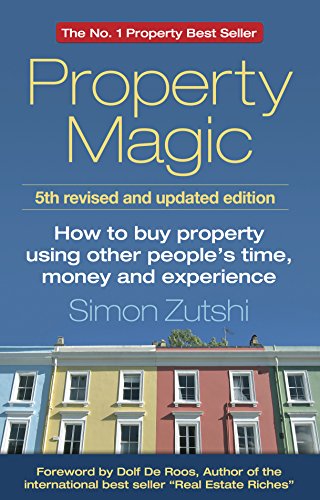
As an Amazon Associate, MoneySCOT earns from qualifying purchases. Book links are affiliate links — clicking them costs you nothing extra and helps support the site.
Related Articles
- LBTT Explained: Scotland's Property Tax — the full LBTT system
- Additional Dwelling Supplement Guide — when ADS applies
- First-Time Buyer Scotland — avoiding LBTT with FTB relief
- Buy-to-Let Tax Scotland — when ADS isn't refundable
- Lifetime ISA for Scottish Property Purchases — using a LISA to buy your first Scottish home and sidestep ADS entirely
This article is for informational purposes only and does not constitute financial, tax, or legal advice. Tax rates and thresholds can change — always verify current rates with Revenue Scotland, HMRC, or mygov.scot, and speak to a qualified financial adviser for advice specific to your circumstances.
Sources: Revenue Scotland — ADS guidance, Revenue Scotland — Refunds and amendments, Land and Buildings Transaction Tax (Scotland) Act 2013