Quick Summary
- Workplace pensions are automatic and often include employer matching — always take the full employer match before considering a SIPP
- A SIPP gives you full investment control — choose from thousands of funds, shares, ETFs, and bonds instead of a limited workplace menu
- Scottish higher-rate relief must be claimed on SIPP contributions — your SIPP provider claims 20%, but the extra 22% (Higher) to 28% (Top) must come via Self Assessment
- Use our free calculator — the Salary Sacrifice Calculator shows the tax and NI saving on pension contributions at your Scottish rate
Most Scottish workers have a workplace pension through auto-enrolment. It works, it's simple, and it includes employer contributions. But some people want more control over where their money is invested — and that's where a Self-Invested Personal Pension (SIPP) comes in.
Quick Answer: A SIPP is a pension you manage yourself, choosing from a wide range of investments. For most Scottish workers, a workplace pension with employer matching should come first — free employer money trumps investment choice. A SIPP makes sense alongside your workplace pension if you want broader investment options, have used up your employer match, or are self-employed. Scottish taxpayers must claim higher-rate relief (above 20%) via Self Assessment on SIPP contributions.
What is a SIPP?
A Self-Invested Personal Pension is a pension wrapper that gives you control over your investments. Unlike most workplace pensions — which offer a menu of 10-30 funds — a SIPP typically offers access to thousands of funds, individual shares, ETFs, investment trusts, and bonds.
Everything else works the same as any pension:
- Contributions get tax relief at your marginal rate
- Growth is tax-free inside the wrapper
- You can access your money from age 57 (rising to 58 in 2028)
- 25% can be taken tax-free, the rest is taxed as income on withdrawal
SIPP vs workplace pension: the comparison
| Feature | Workplace pension | SIPP |
|---|---|---|
| Employer contributions | Yes (typically 3-10%) | No |
| Salary sacrifice option | Usually yes (saves NI) | No |
| Investment choice | Limited (10-30 funds) | Thousands of funds + shares |
| Fees | Often subsidised by employer | You pay platform fees |
| Tax relief method | Usually net pay (automatic) | Relief at source (claim extra yourself) |
| Self-employed access | No | Yes |
| Consolidation | One per employer | One account for life |
| Effort required | Minimal | You manage it |
The critical difference: employer matching
This is the single most important factor. If your employer matches your contributions — say 5% each — then every £1 you contribute to your workplace pension is matched with £1 from your employer. That's an instant 100% return before any investment growth.
No SIPP offers this. Always maximise your employer match before putting a penny into a SIPP.
Typical employer contribution structures
| Your contribution | Employer contribution | Total going in |
|---|---|---|
| 3% (minimum) | 3% (minimum) | 6% |
| 5% | 5% | 10% |
| 7% | 7% | 14% |
| 3% (minimum) | 10% (generous public sector) | 13% |
On a £40,000 salary with 5% each: that's £4,000/year going into your pension, of which only £2,000 comes from your pay. The other £2,000 is free money.
Try it yourself
See how much workplace pension contributions save you in tax and NI at Scottish rates.
Open Salary Sacrifice CalculatorNo sign-up required.
When a SIPP makes sense
1. You've maxed out your employer match
Once you're contributing enough to get the full employer match, additional contributions to the workplace scheme don't attract extra employer money. At that point, a SIPP can be a better home for the surplus — more investment choice, potentially lower fees.
2. Your workplace fund options are poor
Some workplace schemes only offer expensive actively managed funds or a limited range. If you want to invest in low-cost global index trackers and your workplace doesn't offer them, a SIPP fills the gap.
3. You're self-employed
Self-employed people don't have workplace pensions. A SIPP is the most flexible way to save for retirement with full tax relief. You can contribute up to £60,000/year (or 100% of earnings) and claim relief at your Scottish marginal rate.
4. You have multiple old workplace pensions
If you've changed jobs several times, you may have 3-4 small pension pots scattered across providers. A SIPP lets you consolidate them into one account — easier to manage, often cheaper, and simpler to track. For a step-by-step UK walkthrough of consolidation, contribution strategy, and eventual drawdown, Pete Matthew's Meaningful Money Retirement Guide is the clearest book on the subject.
5. You want to invest in individual shares
Some investors want to hold individual company shares or specific ETFs in their pension. Most workplace schemes don't allow this. A SIPP does.
Claiming Scottish higher-rate relief on a SIPP
This is the biggest gotcha for Scottish SIPP holders. When you contribute to a SIPP, your provider uses "relief at source":
- You pay £800
- Provider claims £200 from HMRC (20% basic rate)
- Your SIPP receives £1,000
If you're a Scottish Higher-rate (42%) taxpayer, you're owed an additional 22% — £220 on that £1,000 contribution. But it doesn't arrive automatically. You must claim it through Self Assessment.
| Scottish band | Provider claims | You claim via Self Assessment | Total relief |
|---|---|---|---|
| Starter (19%) | 20% | -1% (you owe HMRC 1% back) | 19% |
| Basic (20%) | 20% | Nothing | 20% |
| Intermediate (21%) | 20% | 1% | 21% |
| Higher (42%) | 20% | 22% | 42% |
| Advanced (45%) | 20% | 25% | 45% |
| Top (48%) | 20% | 28% | 48% |
The Starter rate trap: Scottish Starter-rate taxpayers (earning £12,571–£16,537) actually get over-relieved by their SIPP provider. The provider claims 20% but they only pay 19% tax. HMRC may claw back the 1% difference — another quirk of the Scottish tax system.
How to claim
Register for Self Assessment if you haven't already. On your tax return, enter your total gross pension contributions in the pension section. HMRC calculates the additional relief and either reduces your tax bill or sends a refund.
If you don't do Self Assessment, you can write to HMRC or call them to adjust your tax code instead. But Self Assessment is the most reliable method.
Choosing a SIPP provider
| Provider | Annual fee | Fund dealing | Best for |
|---|---|---|---|
| Vanguard | 0.15% (max £375/yr) | Free (own funds) | Vanguard fund investors |
| AJ Bell | 0.25% | £1.50 | Mix of funds and shares |
| Hargreaves Lansdown | 0.45% | Free (funds) | Widest range, most support |
| Interactive Investor | £143.88/yr flat | Free (monthly) | Larger pots (£50k+) |
| PensionBee | 0.50-0.95% | N/A (managed plans) | Hands-off investors |
For a pot of £50,000+, flat-fee providers like Interactive Investor can be cheaper than percentage-based fees. For smaller pots, Vanguard's 0.15% is hard to beat.
Try it yourself
Check your marginal rate to see how much tax relief you'll get on SIPP contributions.
Open Scottish Income Tax CalculatorNo sign-up required.
SIPP vs ISA for extra savings
If you've maxed your employer pension match and want to invest more, should you use a SIPP or a Stocks & Shares ISA?
| Factor | SIPP | Stocks & Shares ISA |
|---|---|---|
| Tax relief on the way in | 19-48% | None |
| Tax on the way out | 75% taxed as income | None |
| Access | Age 57+ | Any time |
| Annual limit | £60,000 | £20,000 |
| Flexibility | Low (locked until retirement) | High |
Rule of thumb: if you're a Higher-rate (42%+) taxpayer now and expect to be Basic rate in retirement, a SIPP wins — you get 42% relief going in and pay 20% tax coming out. If you're already a Basic-rate taxpayer or want flexible access, an ISA is better.
For most Scottish workers, the answer is both: employer pension first, then ISA for flexibility, then SIPP for extra retirement savings.
Frequently Asked Questions
Can I have a SIPP and a workplace pension at the same time?
Yes. You can contribute to both simultaneously. Your total contributions across all pensions (including employer contributions) can't exceed £60,000/year or 100% of earnings.
Can I transfer my workplace pension into a SIPP?
Usually not while you're still with that employer — most schemes don't allow "in-service" transfers. When you leave, you can typically transfer the pot to a SIPP. Check with your scheme for any transfer penalties or guarantees you'd lose.
Do I lose my employer contributions if I also open a SIPP?
No. Your employer contributions to the workplace scheme continue as normal. The SIPP is entirely separate — it doesn't affect your workplace pension at all.
Is a SIPP worth it for small amounts?
Probably not. If you're only contributing £50-100/month beyond your employer match, the hassle of Self Assessment claims and managing a separate account may not be worth it. Consider increasing your workplace contributions instead (though you'd miss the wider investment choice).
What happens to my SIPP when I die?
If you die before 75, your SIPP can be passed to beneficiaries completely tax-free. After 75, beneficiaries pay income tax at their marginal rate on withdrawals. This makes SIPPs a potentially powerful inheritance planning tool — though this is an area where professional advice is valuable.
Drawdown tax for Scottish pensioners
When you take money from a SIPP in retirement, 25% is tax-free (the Pension Commencement Lump Sum). The remaining 75% is taxed as income at your marginal rate in the year you withdraw it.
For Scottish pensioners, this creates a planning opportunity: the rate you pay in retirement may be much lower than the rate you got relief at during contributions. The ideal scenario is contributing at 42% (Higher) or 45% (Advanced) during working life and withdrawing at 20% (Basic) or 21% (Intermediate) in retirement.
Worked example: Scottish SIPP drawdown
Janet, retired at 67. She takes £30,000/year from her SIPP alongside an £11,000 State Pension:
- Total income: £41,000
- Personal Allowance: £12,570 (including higher State Pension personal allowance if applicable)
- Taxable income: £28,430
- Scottish tax: Basic and lower Intermediate bands — approximately £4,900
When Janet was working at £65,000, she contributed to the SIPP at 42% (Higher rate). Now she withdraws at an effective rate of approximately 12% on the gross SIPP income. The relief-vs-withdrawal arbitrage is roughly 30 percentage points — the pension was highly tax-efficient.
The risk: withdrawing too much in one year. Jumping from £30,000 to £70,000 withdrawals to fund a large purchase pushes income into the 42% Higher band. Spreading withdrawals across years keeps income in lower bands. This is where a pension drawdown calculator becomes useful.
Inherited SIPP rules: before and after 75
SIPPs are powerful inheritance planning vehicles because they sit outside your estate for Inheritance Tax purposes. The rules depend on whether you die before or after age 75:
If you die before 75:
- Beneficiaries receive the entire SIPP tax-free
- No income tax, no IHT
- Beneficiaries can take money at any time, in any amount, without tax
- This is the most tax-efficient scenario — a SIPP can be worth more than an equivalent ISA if you die young
If you die after 75:
- Beneficiaries receive the SIPP as a "crystallised fund"
- Withdrawals are taxed as income at the beneficiary's marginal rate
- The beneficiary's location matters: if they're a Scottish taxpayer, Scottish rates apply; if English, English rates apply
- There's still no IHT on the SIPP itself
Important change from April 2027 (proposed): The government has proposed bringing pensions into the IHT estate from April 2027. If this legislation passes, inherited SIPPs above the nil-rate band could face 40% IHT. For larger pension pots, this fundamentally changes the estate planning maths — seek advice before relying on pension inheritance as a planning strategy.
Further reading on pensions and retirement
Pensions are the most complex part of UK personal finance. These UK-focused books cover the real decisions — SIPP vs workplace, drawdown vs annuity, tax-efficient withdrawal.

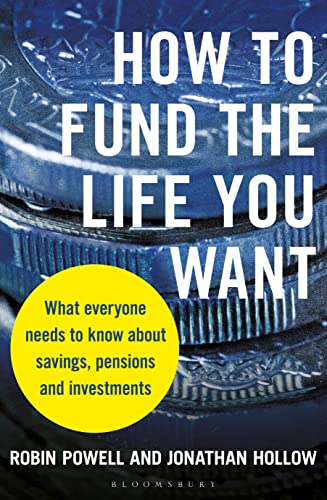

As an Amazon Associate, MoneySCOT earns from qualifying purchases. Book links are affiliate links — clicking them costs you nothing extra and helps support the site.
Related Articles
- Pension Contributions in Scotland — full guide to relief at Scottish rates
- Salary Sacrifice in Scotland — why sacrifice beats personal contributions
- The Scottish 60% Tax Trap — pension contributions to escape the 67.5% rate
- Tax-Efficient Investing in Scotland — ISAs, pensions, VCTs in priority order
- Pension Drawdown Tax Calculator — model your retirement income tax
- Scottish FIRE Calculator — ISA/SIPP split for early retirement
- Private vs Workplace Pension Scotland — comparing flexibility, charges, and tax relief access in depth
This article is for informational purposes only and does not constitute financial, tax, or legal advice. Tax rates and thresholds can change — always verify current rates with Revenue Scotland, HMRC, or mygov.scot, and speak to a qualified financial adviser for advice specific to your circumstances.
Sources: HMRC — Self-invested personal pensions, HMRC — Pension tax relief, The Pensions Regulator — Automatic enrolment, Scottish Government — Income Tax rates