Quick Summary
- A deceased person's ISA becomes a Continuing Account of Deceased Investor (CADI) — it remains ISA-sheltered until the estate is wound up (up to 3 years), with no income tax or CGT during that period
- Surviving spouses get an Additional Permitted Subscription (APS) — a one-off extra ISA allowance equal to the deceased's ISA value, on top of the normal £20,000 annual limit
- Scottish legal rights (legitim and jus relictae) can affect the ISA inheritance — adult children have a legal right to claim up to 1/3 of the net moveable estate, which includes ISA holdings, even against the terms of the will
- Use our free calculator — the Scottish Intestacy Calculator shows how assets would be distributed under Scots law
Most English-focused guides on ISA inheritance miss a significant complication for Scottish estates. Scotland's unique succession law — based on the Succession (Scotland) Act 1964 rather than English common law — gives legal rights to spouses and children that operate regardless of what the will says. ISA holdings sit squarely in the moveable estate subject to these claims.
Quick Answer: When a Scottish ISA holder dies, their spouse or civil partner can claim an Additional Permitted Subscription (APS) equal to the value of the ISA — allowing them to shelter that sum in their own ISA tax-free. The APS is UK-wide and works the same in Scotland as England. The Scottish complication is legitim: adult children have a legal right to claim up to one-third of the net moveable estate (which includes ISA assets), even where a will exists. This can reduce what the surviving spouse inherits — and therefore the APS amount. Get Scottish solicitor advice on estates where children and a surviving spouse both have claims.
Contents
- What happens to an ISA when you die in Scotland
- The Additional Permitted Subscription explained
- How Scottish succession law differs from England
- How legal rights interact with ISA inheritance
- Inheritance Tax and ISAs
- Practical steps for the surviving spouse
- Wills in Scotland and ISA planning
- Frequently asked questions
What happens to an ISA when you die in Scotland
An ISA does not automatically close when its holder dies. Instead, it converts to a Continuing Account of Deceased Investor (CADI).
During the CADI period:
- No new contributions can be made to the account
- Existing investments can remain invested and continue to grow
- Growth, dividends, and interest inside the CADI remain free from income tax and CGT
- The CADI lasts until the estate is wound up, or a maximum of 3 years from the date of death — whichever comes first
This is important: there is no immediate tax trigger on death for ISA assets. The tax advantages of the ISA wrapper persist through the estate administration period, giving executors (known as executors-nominate in Scotland, not personal representatives) time to manage the wind-down without a sudden tax bill.
Once the CADI is wound up, the proceeds become part of the estate to be distributed according to the will or the rules of intestacy.
ℹ️ Scotland-specific term: In Scotland, the executor applies for Confirmation — the Scottish equivalent of probate in England. Confirmation from the Sheriff Court gives the executor legal authority to collect and distribute the estate. Until Confirmation is granted, the ISA provider will not wind up the CADI or release funds.
The Additional Permitted Subscription explained
The Additional Permitted Subscription (APS) is the mechanism that allows the surviving spouse or civil partner to inherit the tax-free status of the deceased's ISA. It applies UK-wide, including Scotland.
The APS works as follows:
- The deceased ISA holder's account converts to a CADI on death
- The surviving spouse is entitled to an APS allowance equal to the value of the deceased's ISA at the date of death (or, if higher, the value when the account is closed)
- The surviving spouse can subscribe up to this APS amount to their own ISA — without it counting toward their own annual £20,000 ISA allowance
- The APS must be used within 3 years of the spouse's death or 180 days after the estate administration is complete, whichever is later
Example: how APS works
Suppose your spouse dies with a Stocks and Shares ISA worth £150,000. As the surviving spouse, you receive a £150,000 APS allowance on top of your normal £20,000 ISA allowance for the year. You can invest the entire £150,000 into your own ISA, sheltering all future growth from income tax and CGT.
If the ISA has grown during the CADI period to £158,000 by the time the account is closed, your APS is based on the higher figure — £158,000.
The APS does not require you to move money into the same ISA provider. You can take the APS allowance to any ISA provider and invest at whatever platform you choose.
| Feature | Details |
|---|---|
| Who qualifies | Spouse or civil partner (not unmarried partners) |
| How much | Value of deceased's ISA at death, or at closure if higher |
| Annual allowance | In addition to normal £20,000 — not included in it |
| Deadline | 3 years from death or 180 days after administration |
| Provider | Any FCA-registered ISA provider |
| Types | APS can go into Cash or Stocks and Shares ISA |
Source: HMRC ISA bereavement guidance, GOV.UK
Try it yourself: Our free Scottish Intestacy Calculator shows how an estate would be distributed under Scots law — useful if there's no will or if intestacy rules might apply to part of the estate. No sign-up required.
How Scottish succession law differs from England
This is where Scottish ISA inheritance becomes materially more complex than the English position. Scotland's succession law is not based on English common law — it derives from Scots law principles codified in the Succession (Scotland) Act 1964.
The central concept is legal rights: automatic entitlements that certain family members have to a portion of the estate, regardless of what the will says and regardless of whether the deceased died without a will.
Legal rights in Scotland apply to moveables only — moveable estate includes:
- Bank accounts and cash
- Investments, shares, and funds
- ISA holdings
- Contents of the house
- Most other assets that are not land or buildings
Heritable estate (land and buildings, including the family home) has different rules and legal rights do not apply to it.
| Legal right | Who holds it | What they can claim |
|---|---|---|
| Jus relictae | Surviving spouse | 1/3 of net moveable estate (if children survive); 1/2 if no children |
| Jus relicti | Surviving husband | Same as jus relictae |
| Legitim | Children (including adult children) | 1/3 of net moveable estate (if spouse survives); 1/2 if no spouse |
These rights are in addition to what is left under the will. A surviving spouse who inherits everything under the will still has jus relictae. Adult children who are left nothing in the will still have legitim.
Importantly, legal rights claimants must elect to take their legal rights. Claiming legal rights means giving up any benefit under the will in respect of the moveables — a claimant cannot take both. In practice, adult children often waive legitim in favour of an older surviving parent. But it is their right to claim, and some do.
Prior rights: the surviving spouse's first priority
Before legal rights are calculated, the surviving spouse is also entitled to prior rights from the intestate estate (assets not covered by a valid will):
- The dwellinghouse (or value up to £473,000, if the house passes by will separately)
- Furniture (up to £29,000)
- Financial provision (£50,000 if survived by children; £89,000 if not)
Prior rights come before legal rights in the queue. This matters for ISA inheritance planning: if the estate is entirely covered by a valid will (house to spouse, ISA to spouse, etc.), prior rights don't apply. If there's no will, prior rights can consume a significant portion of the moveable estate before legitim is calculated.
⚠️ Get Scottish legal advice: The interaction between prior rights, legal rights, and the will in a Scottish estate is fact-specific and can be complex. The figures above may change — prior right amounts are uprated periodically by Scottish Ministers. Always confirm current figures with a solicitor registered with the Law Society of Scotland.
How legal rights interact with ISA inheritance
Here is the complication that English-focused ISA guides miss: if an ISA holder dies and adult children claim legitim, the ISA holdings are part of the net moveable estate on which legitim is calculated.
Worked example
Suppose the deceased has:
- A Stocks and Shares ISA: £200,000
- A bank account: £50,000
- A house (heritable property): £300,000 (passes directly to spouse under will)
Net moveable estate = £200,000 + £50,000 = £250,000 (the house is heritable and not included)
If the will leaves everything to the spouse, but there are two adult children who choose to claim legitim:
- Legitim = 1/3 × £250,000 = £83,333
- Each child gets £41,667
This means the spouse does not inherit the full £250,000 moveable estate — they inherit £166,667 after legitim is satisfied.
How does this affect APS? The APS allowance is based on what the spouse inherits from the ISA. If the ISA is wound up and part of the proceeds are used to satisfy legitim claims, the spouse's APS reflects the reduced amount.
In practice, the exact impact depends on how the estate accounts are drawn up and how the legitim fund is calculated — a Scottish solicitor handles this during the Confirmation process.
The honest take
Most online articles about ISA inheritance treat it as a simple spousal transfer. In Scotland, it isn't always that straightforward. If you have adult children from a previous relationship, or adult children who you don't expect to waive legitim, your spouse may not inherit your full ISA value. The APS will be correspondingly reduced. For a couple with substantial ISA assets and children on both sides, this is worth proper legal planning now — not just when the estate is being administered.
Stay in control of who inherits
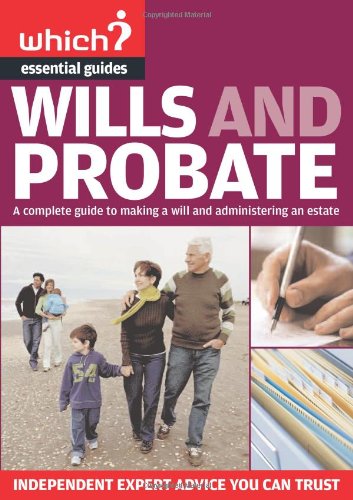
As an Amazon Associate, MoneySCOT earns from qualifying purchases. Book links are affiliate links — clicking them costs you nothing extra and helps support the site.
Inheritance Tax and ISAs
The ISA wrapper provides no Inheritance Tax exemption. ISA assets are included in the estate at full market value for IHT purposes.
The IHT calculation follows UK rules:
| Allowance | 2026/27 |
|---|---|
| Nil-rate band | £325,000 |
| Residence nil-rate band (RNRB) | £175,000 (if main home passes to direct descendants) |
| Combined maximum | £500,000 per individual |
| Spousal exemption | Unlimited (transfers between spouses are IHT-exempt) |
Transfers to spouse: assets passing to a surviving spouse or civil partner are exempt from IHT regardless of value. So a spouse inheriting a £200,000 ISA pays no IHT on that transfer. The spouse also inherits any unused nil-rate band from the deceased.
Transfers to children: ISA assets inherited by children are part of the taxable estate. The nil-rate band and RNRB (if available) reduce the taxable amount — but substantial ISA holdings can push an estate into the 40% IHT zone.
💡 Planning point: Because ISA assets are included in the IHT estate, Scottish residents with substantial ISA holdings might consider whether pension assets (which are generally outside the estate for IHT, until 2027 changes are confirmed) offer a more tax-efficient legacy strategy. This is a complex area — speak to a financial adviser or solicitor who specialises in Scottish estate planning.
Practical steps for the surviving spouse
If your spouse has died and held an ISA, the steps in Scotland are:
-
Register the death and obtain the death certificate. You'll need multiple certified copies for different institutions.
-
Contact the ISA provider promptly. Inform them of the death and request information on the deceased's ISA value. The provider will convert the ISA to a CADI.
-
Apply for Confirmation from the Sheriff Court. This is the Scottish equivalent of probate — without it, you cannot instruct the ISA provider to wind up the account or distribute assets. A solicitor will typically handle this.
-
Check whether adult children are claiming legitim. This is usually discussed during the estate administration process. Many children waive legitim in favour of a surviving parent — but if a child has a different relationship with the deceased, or if the estate is complex, legal advice is essential.
-
Once the estate is settled, ask the ISA provider to confirm your APS allowance. The APS is based on the value of the deceased's ISA — confirm whether this is the date-of-death value or the closure value (you're entitled to the higher figure).
-
Invest the APS into your own ISA. You can use the same provider or transfer the allowance to a different ISA provider. The APS must be used within 3 years of death or 180 days after estate administration — don't let the deadline pass.
-
Consider consolidation. If the deceased held ISAs at multiple providers (you can have more than one now), the APS is calculated separately for each. You can invest all APS amounts into a single ISA at one provider.
Try it yourself: Our free ISA vs SIPP Calculator can help you think about how to invest your APS allowance alongside your own pension planning. No sign-up required.
Wills in Scotland and ISA planning
Writing a will in Scotland is strongly recommended even if you plan to leave everything to your spouse. Here's why it matters for ISA holders:
Intestacy is complex in Scotland. Without a will, the intestacy rules (prior rights, legal rights, then free estate) determine what happens to your assets. The house, furniture, and cash allowances for the surviving spouse under prior rights are set amounts — they may not cover the full estate value. What remains after prior rights is divided according to legal rights and then the intestacy free estate rules.
A will speeds up Confirmation. With a valid will and appointed executor-nominate, the Confirmation process at the Sheriff Court is more straightforward than intestate Confirmation. This matters for the CADI — the sooner Confirmation is granted, the sooner the ISA can be wound up and the APS activated.
A will cannot fully exclude legal rights. You cannot write a will that removes a surviving spouse's jus relictae or a child's legitim. These are automatic legal entitlements. What a will can do is clarify your intentions for the heritable estate and the free moveable estate after legal rights are satisfied.
Consider a survivorship clause. A standard Scottish will includes a survivorship clause — assets pass to a spouse only if they survive by a set period (commonly 30 days). This prevents double-administration if both spouses die close together.
For larger estates, a Scottish solicitor can also advise on special destinations in the title to property and life assurance nominations — both of which can keep some assets outside the estate entirely.
Frequently Asked Questions
Can I leave my ISA directly to my children rather than my spouse?
Yes — you can leave your ISA assets to whoever you name in your will. Your children would inherit the proceeds of the wound-up CADI. However, children do not get an APS — the Additional Permitted Subscription is only available to a surviving spouse or civil partner. The ISA wrapper is lost for children; they receive the cash or investments as standard inheritance. This is one reason why ISA assets often work best as a spousal inheritance first, with the APS preserving the tax wrapper.
Does the APS apply to unmarried partners?
No. The APS is available only to a spouse or civil partner — not to unmarried partners regardless of how long you've lived together. Scotland has no common law marriage — cohabitation confers no automatic spousal rights. This is one of several significant differences between married and cohabiting couples in Scotland. Scottish cohabitation law (Family Law (Scotland) Act 2006) gives surviving cohabitants some rights to apply to court for provision from the estate within 6 months of death — but this is not automatic, not equivalent to spousal rights, and requires court application. Cohabiting couples with substantial ISA holdings should take specialist legal advice on their options.
What if I have ISAs at multiple providers?
Since April 2024, you can hold ISAs at multiple providers simultaneously. If the deceased had ISAs at three different providers, the APS allowance is calculated separately for each account. You can invest each APS at any provider — you're not obliged to use the same provider as the deceased. Keep track of each APS deadline (3 years from death or 180 days after administration per account).
Do I still pay CGT when the estate ISA is wound up?
No — gains made within the CADI period are not subject to CGT. The Continuing Account of Deceased Investor retains the ISA's CGT exemption for up to 3 years from the date of death (or until the estate is wound up). If the CADI is wound up after 3 years, gains after that point may become taxable — another reason to progress Confirmation and estate administration efficiently.
Try it yourself
ISAs are not IHT-free — they count towards the estate. Estimate the IHT on the whole estate with the nil-rate and residence bands.
Open Scottish Inheritance Tax CalculatorNo sign-up required.
Further reading on passing on your estate
Scotland's succession rules are distinctive, but the IHT and estate-planning mechanics are UK-wide — these cover both sides.

As an Amazon Associate, MoneySCOT earns from qualifying purchases. Book links are affiliate links — clicking them costs you nothing extra and helps support the site.
Related Articles
- Scottish Intestacy Rules Explained — how assets are distributed without a will in Scotland
- Confirmation in Scotland: Guide to Probate — the Confirmation process step by step
- How to Write a Will in Scotland — what your will must cover under Scots law
- Inheritance Tax in Scotland: What You Actually Owe — nil-rate bands, RNRB, and spousal exemptions
- Best Stocks and Shares ISA for Scottish Taxpayers — picking the right ISA platform for your needs
This article is for informational purposes only and does not constitute financial, tax, or legal advice. Tax rates and thresholds can change — always verify current rates with Revenue Scotland, HMRC, or mygov.scot, and speak to a qualified financial adviser for advice specific to your circumstances.
Sources
- HMRC: ISA bereavement guidance — GOV.UK, 2026/27
- Succession (Scotland) Act 1964 — legislation.gov.uk
- Law Society of Scotland: succession and inheritance — Law Society of Scotland
- Scottish Government: prior rights amounts — Scottish Government
- HMRC: Inheritance Tax nil-rate band — GOV.UK, 2026/27
- Family Law (Scotland) Act 2006 — legislation.gov.uk